Spotlight on: Sustainable materials
As we become more mindful of the environmental impact of our lifestyle choices, the materials we choose for our homes can play an important role. Here, we take a closer look at some of the materials being explored in contemporary furniture design — from recycled plastics and renewable natural materials to innovative new alternatives — and the ways they can contribute to a more considered approach to design.
Of course, material choice is only one part of the picture. A genuinely considered piece of furniture is about more than what it is made from: how it is produced, how long it is designed to last, and what happens at the end of its life all matter too. That’s why, first and foremost, our focus is on forever furniture – well-crafted designs made to be lived with and enjoyed for years to come.
With that in mind, we’re exploring some of the materials and approaches that can help us make more considered choices when furnishing our homes.
Recycled plastics
We’re all well aware of the plastic problem, and many designers are searching for a way that used plastics can be given a second life. Whether it’s post-industrial plastic, discarded household waste or plastic collected from our oceans – companies such as Fritz Hansen, Gubi, &Tradition and Mater have been developing ways to turn this problem material into beautifully designed furniture for our homes.
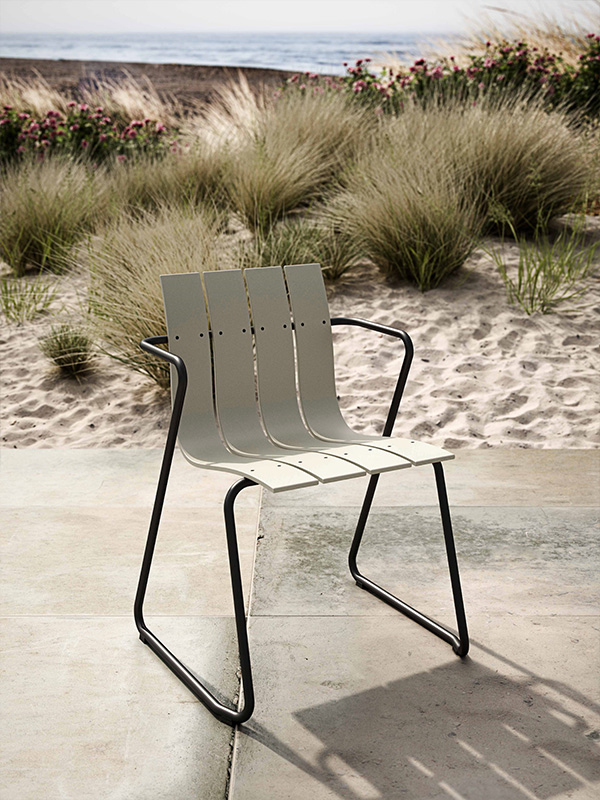
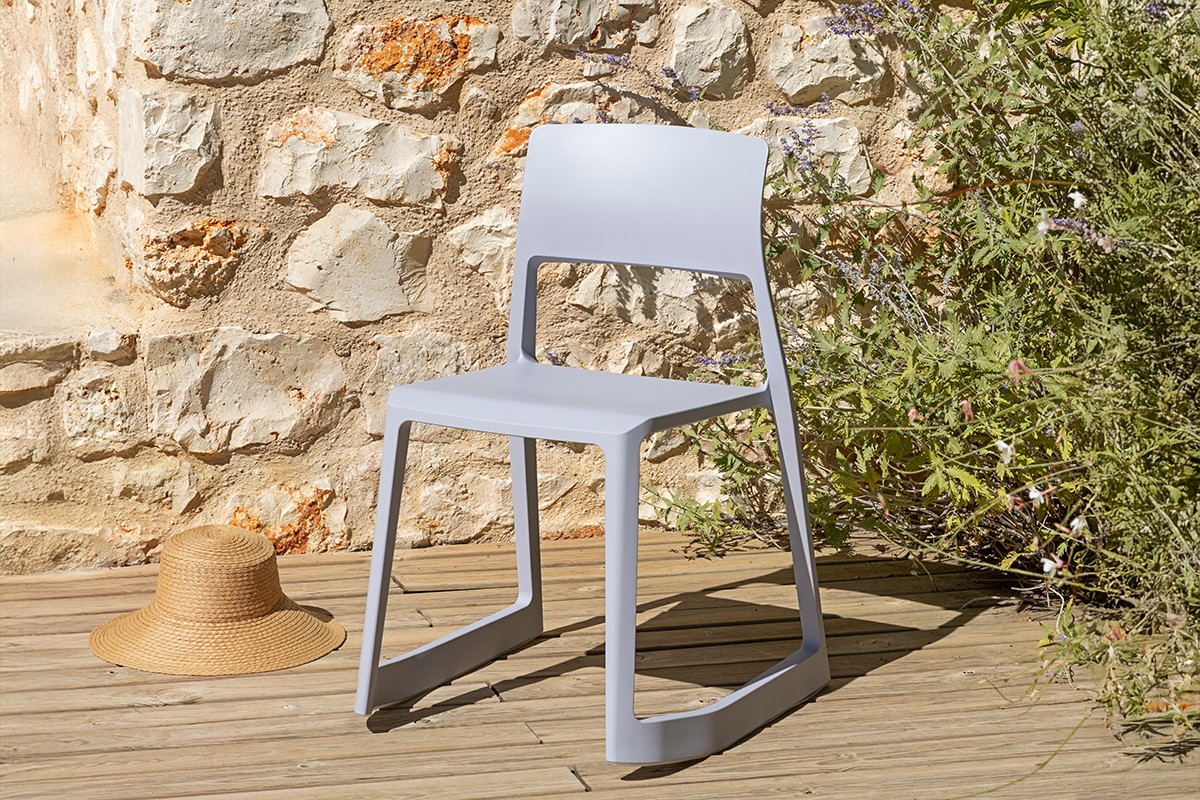
To create their Ocean Collection, Danish company Mater work in collaboration with Plastix, another Danish company that take maritime waste and turn it into pellets which can then be moulded into new pieces of furniture. Every Ocean Chair makes use of just under a kilo of waste plastic and even more is used to make the Ocean tables. Durable and weatherproof – recycled plastic furniture makes the perfect choice for use outdoors.
But what about when these recycled plastics reach the end of their life? Many, like the Mater Ocean Chair, embrace the idea of circular production and can be easily taken apart and re-recycled, preventing waste and giving these materials yet another lease of life.
You can shop our collection of recycled plastic designs here.
Naturally renewable materials
Renewable materials offer an interesting alternative to more conventional furniture materials, while often bringing natural texture and tactility into the home.
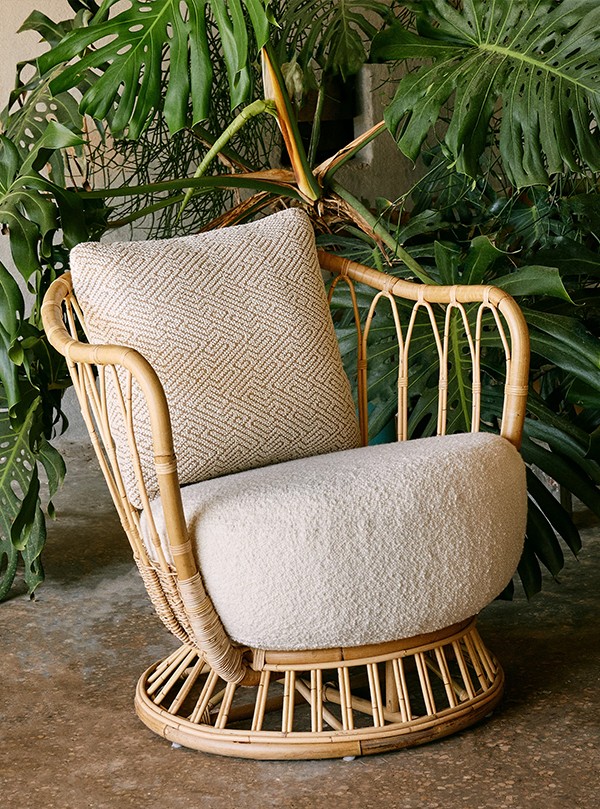
Rattan – a climbing member of the palm family, rattan is a fast-growing plant that has been used to craft furniture for centuries. Strong, flexible and very durable, the outer layer of the rattan plant can be peeled off and used for weaving, whereas the core can be moulded to create furniture, leaving minimal waste.
The sourcing and harvesting of sustainably managed rattan helps to provide employment for communities around the world – giving a significant boost to local economies. Requiring almost no maintenance, rattan is also an incredibly durable material that will last for years to come. And once a piece of furniture does inevitably come to the end of its life, this material is biodegradable.
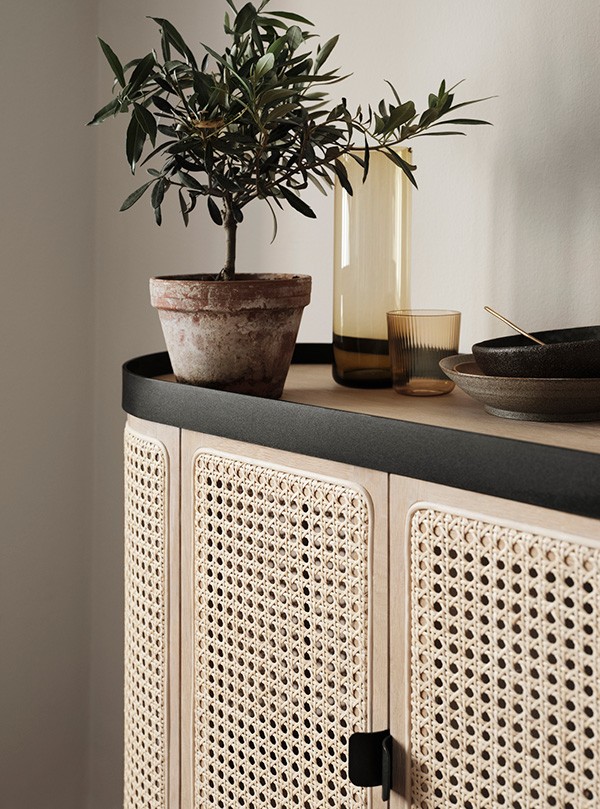
When searching for rattan furniture, also look out for the words wicker and cane. Cane describes the thinner material obtained from stripping the rattan plant and is traditionally used for weaving. Wicker however describes the weaving process and wicker furniture could be made from rattan but could also be made from bamboo, reed, willow or even synthetic fibres – so double-check the details.
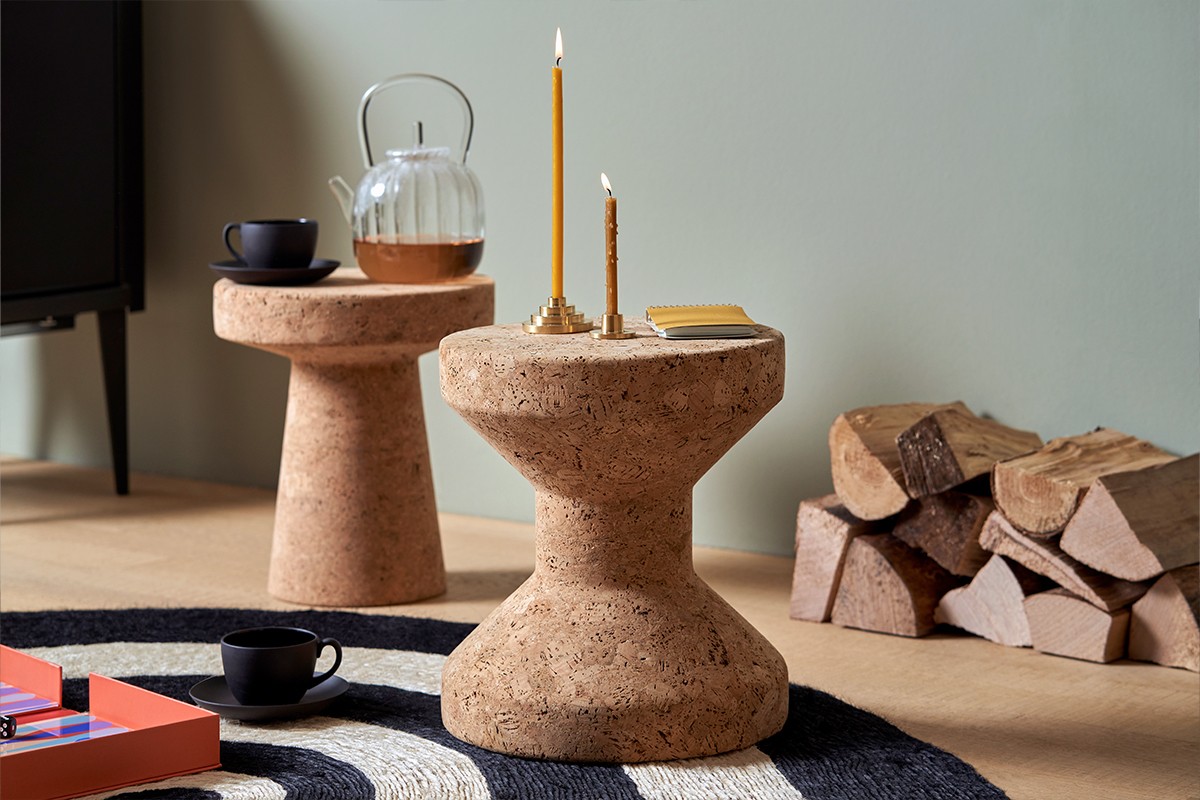
Cork – another renewable resource, cork comes from the bark of cork oak trees that grow in Mediterranean Europe and North Africa. When the cork is harvested, it is carefully stripped away from the trunk of the tree by hand, and the tree then left to regenerate its bark before being harvested once again. It takes between 9-12 years for a cork tree to fully regenerate its bark (a much longer time than it takes for rattan to re-grow) but as the trees are regrowing their bark, they take in up to five times more carbon from the atmosphere to fuel the photosynthesis needed for regrowth.
Hemp a fast-growing natural fibre and is increasingly being explored as a renewable alternative in furniture design. Strong and durable, it can be used in innovative ways to create materials with a distinctive natural character.
Normann Copenhagen’s Mat Chair is one example, using hemp fibres to create its distinctive shell. The material was developed through extensive research and testing, offering an alternative to conventional plastic while exploring new possibilities for renewable materials.
For more information on the sustainability of certain products, you can contact our dedicated product specialists, who would be happy to talk you through the information. Simply call 0114 243 3000 or email info@nest-new.live. Alternatively, discover more about how to choose sustainable furniture in our guide to buying sustainably.
Spotlight on: Sustainable materials
As we become more mindful of the environmental impact of our lifestyle choices, the materials we choose for our homes can play an important role. Here, we take a closer look at some of the materials being explored in contemporary furniture design — from recycled plastics and renewable natural materials to innovative new alternatives — and the ways they can contribute to a more considered approach to design.
Of course, material choice is only one part of the picture. A genuinely considered piece of furniture is about more than what it is made from: how it is produced, how long it is designed to last, and what happens at the end of its life all matter too. That’s why, first and foremost, our focus is on forever furniture – well-crafted designs made to be lived with and enjoyed for years to come.
With that in mind, we’re exploring some of the materials and approaches that can help us make more considered choices when furnishing our homes.
Recycled plastics
We’re all well aware of the plastic problem, and many designers are searching for a way that used plastics can be given a second life. Whether it’s post-industrial plastic, discarded household waste or plastic collected from our oceans – companies such as Fritz Hansen, Gubi, &Tradition and Mater have been developing ways to turn this problem material into beautifully designed furniture for our homes.
To create their Ocean Collection, Danish company Mater work in collaboration with Plastix, another Danish company that take maritime waste and turn it into pellets which can then be moulded into new pieces of furniture. Every Ocean Chair makes use of just under a kilo of waste plastic and even more is used to make the Ocean tables. Durable and weatherproof – recycled plastic furniture makes the perfect choice for use outdoors.
But what about when these recycled plastics reach the end of their life? Many, like the Mater Ocean Chair, embrace the idea of circular production and can be easily taken apart and re-recycled, preventing waste and giving these materials yet another lease of life.
You can shop our collection of recycled plastic designs here.
Naturally renewable materials
Renewable materials offer an interesting alternative to more conventional furniture materials, while often bringing natural texture and tactility into the home.
Rattan – a climbing member of the palm family, rattan is a fast-growing plant that has been used to craft furniture for centuries. Strong, flexible and very durable, the outer layer of the rattan plant can be peeled off and used for weaving, whereas the core can be moulded to create furniture, leaving minimal waste.
The sourcing and harvesting of sustainably managed rattan helps to provide employment for communities around the world – giving a significant boost to local economies. Requiring almost no maintenance, rattan is also an incredibly durable material that will last for years to come. And once a piece of furniture does inevitably come to the end of its life, this material is biodegradable.
When searching for rattan furniture, also look out for the words wicker and cane. Cane describes the thinner material obtained from stripping the rattan plant and is traditionally used for weaving. Wicker however describes the weaving process and wicker furniture could be made from rattan but could also be made from bamboo, reed, willow or even synthetic fibres – so double-check the details.
Cork – another renewable resource, cork comes from the bark of cork oak trees that grow in Mediterranean Europe and North Africa. When the cork is harvested, it is carefully stripped away from the trunk of the tree by hand, and the tree then left to regenerate its bark before being harvested once again. It takes between 9-12 years for a cork tree to fully regenerate its bark (a much longer time than it takes for rattan to re-grow) but as the trees are regrowing their bark, they take in up to five times more carbon from the atmosphere to fuel the photosynthesis needed for regrowth.
Hemp a fast-growing natural fibre and is increasingly being explored as a renewable alternative in furniture design. Strong and durable, it can be used in innovative ways to create materials with a distinctive natural character.
Normann Copenhagen’s Mat Chair is one example, using hemp fibres to create its distinctive shell. The material was developed through extensive research and testing, offering an alternative to conventional plastic while exploring new possibilities for renewable materials.
For more information on the sustainability of certain products, you can contact our dedicated product specialists, who would be happy to talk you through the information. Simply call 0114 243 3000 or email info@nest-new.live. Alternatively, discover more about how to choose sustainable furniture in our guide to buying sustainably.